October 22, 2026
Executing complex construction and industrial lifts requires heavy equipment, precise scheduling, and specialized technical expertise. Purchasing an industrial crane involves massive capital expenditure, long-term depreciation risks, and ongoing overhead expenses that can drain working capital. For contractors and project managers seeking to optimize operational workflows, utilizing professional crane rental services offers a flexible, cost-effective alternative to equipment ownership. Modern rental providers deliver immediate access to state-of-the-art machinery, certified operators, and comprehensive logistical support tailored to specific job site demands. Understanding how temporary equipment sourcing impacts project timelines and bottom-line expenses empowers project managers to make smarter procurement decisions.
Taking an active, strategic approach to fleet management ensures that projects remain financially lean and schedule-compliant. Evaluating your job site needs early prevents last-minute hardware mismatches during crucial construction milestones.
Eliminating Equipment Maintenance and Storage Overhead Costs
Owning a fleet of heavy lifting machinery introduces substantial long-term financial liabilities that extend far beyond the initial purchase price. Heavy machinery requires routine mechanical maintenance, specialized storage facilities, safety inspections, and comprehensive insurance coverage even during periods when the equipment sits idle. According to Zipdo, ongoing maintenance can run between 10% and 20% of a crane's initial purchase price each year, with insurance contributing an extra 3% of the machine's total value. Partnering with a professional crane rental company shifts these recurring financial burdens directly onto the equipment provider. Rental services ensure every machine undergoes rigorous safety checks and mechanical servicing prior to arriving on site. Eliminating long-term maintenance costs and storage fees frees up vital capital, allowing contractors to reallocate financial resources toward core construction activities. Avoiding unexpected repair bills allows project managers to maintain strict control over baseline operating budgets. Eliminating long-term equipment depreciation from your balance sheet also simplifies corporate tax management and asset tracking.
Accessing Specialized Fleet Technology for Every Job Phase
Different construction phases demand specific lifting capacities, boom lengths, and maneuverability profiles depending on site conditions and structural requirements. Purchasing a single static crane limits a contractor’s operational range, often forcing teams to adapt project plans to fit existing equipment limits. Utilizing flexible crane rental options allows project planners to match the exact machinery size and reach to each specific project phase. Modern fleets also come equipped with advanced telematics that monitor load metrics in real time.
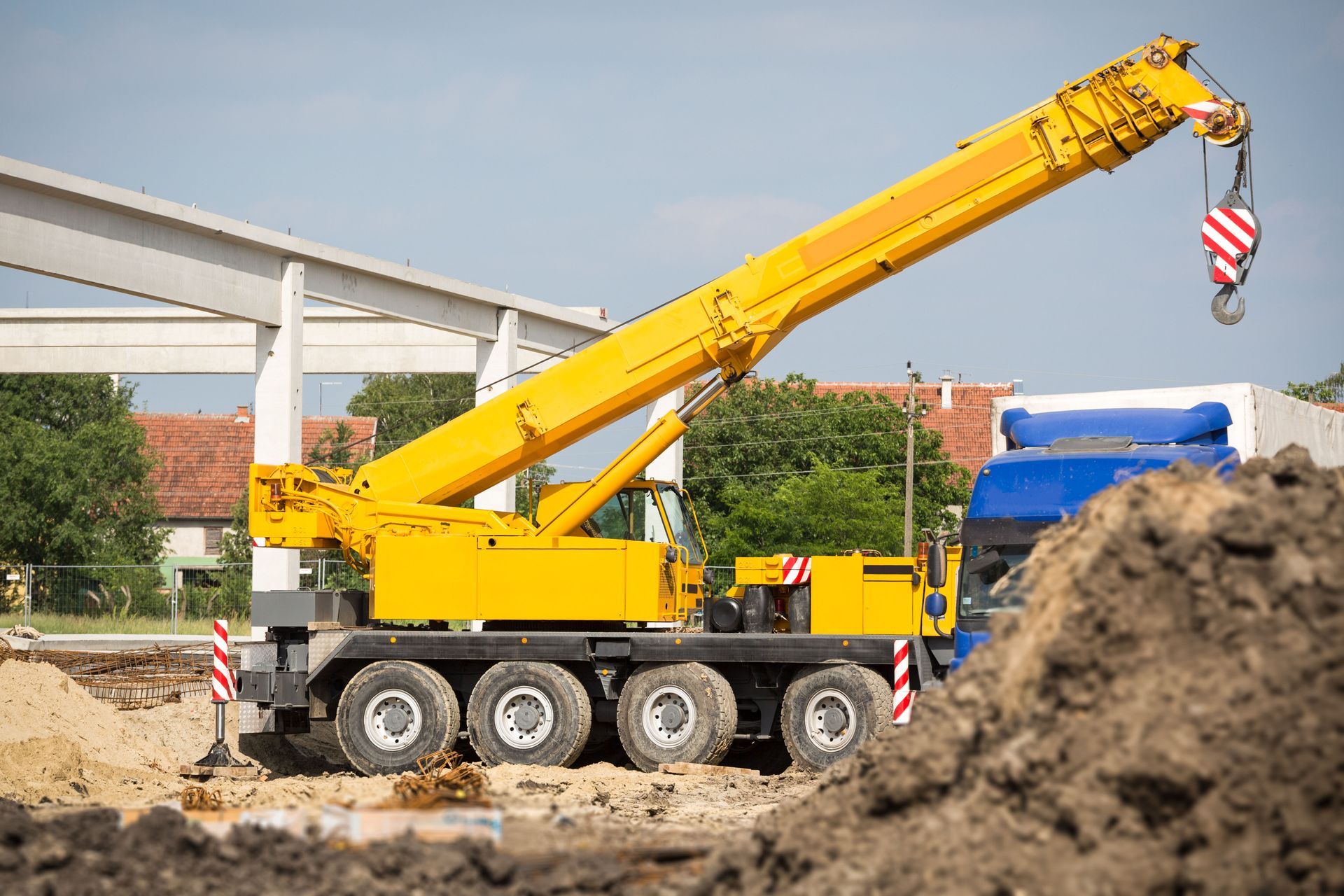
Whether a job site requires a compact all-terrain unit for tight urban spaces or a heavy-duty crawler for large-scale structural steel assembly, rental fleets offer immediate access to ideal machinery. Accessing modern, technologically advanced equipment ensures higher operational efficiency, improved safety features, and faster material handling across every stage of development. Switching machinery types seamlessly between construction phases prevents underutilizing heavy equipment on site.
Reducing Job Site Downtime With Immediate On-Demand Delivery
Unplanned equipment breakdowns represent one of the primary drivers of costly project delays and missed construction deadlines. When an owner-operated crane experiences a major mechanical failure, work on the entire site frequently grands to a halt while replacement parts or repair technicians are dispatched. Working with an established crane rental supplier provides immediate operational redundancy and emergency support services. Having backup machinery available on short notice keeps critical trade schedules aligned and moving forward smoothly.
Rental providers maintain deep equipment inventories and dedicated field support teams capable of servicing or replacing faulty machinery rapidly. Securing reliable, on-demand machinery delivery ensures that critical path tasks remain on schedule, preventing domino-effect delays across sub-contractor workflows and keeping overall project timelines on track. Prompt equipment dispatch minimizes costly idle labor hours across your entire job site crew.
Leveraging Certified Operators and Specialized Rigging Expertise
Operating heavy hoisting equipment safely requires rigorous technical certification, extensive field experience, and deep familiarity with complex rigging physics. Hiring, training, and retaining full-time, certified crane operators creates significant administrative and payroll burdens for general contracting firms. Most professional crane rental packages include options for turnkey service, providing fully licensed and insured operators along with experienced rigging crews.
Utilizing seasoned crews significantly reduces the risk of operational errors during high-precision placement tasks. These specialized professionals possess the training required to execute complex blind lifts, tandem hoisting operations, and heavy machinery placement safely. Relying on skilled rental crews reduces workplace injury risks, minimizes site liability, and ensures that heavy loads are moved efficiently and strictly within established safety parameters. Professional crews bring proven safety protocols that help streamline required OSHA and local job site inspections.
Simplifying Job Site Logistics and Transport Permitting
Transporting oversized heavy machinery across public roadways involves complex regulatory compliance, specialized transport trailers, and detailed route permitting protocols. Local municipalities and state transit authorities impose strict weight limits, escort vehicle requirements, and restricted travel windows for heavy equipment transport. A full-service crane rental provider manages all logistical arrangements, including route planning, highway permits, and transport logistics from the equipment yard directly to the job site. Experienced dispatch teams anticipate regional traffic bottlenecks and road restrictions well before equipment mobilization begins. Offloading transport responsibilities to experienced equipment dispatchers eliminates administrative bottlenecks and ensures machinery arrives precisely when needed.
Streamlining equipment transport logistics keeps project managers focused on site execution rather than navigating complex municipal transit regulations.
Streamlining Site Planning With Digital Lift Engineering
Modern lifting operations rely heavily on pre-lift engineering models to verify ground bearing pressure, boom clearance, and structural load distribution prior to executing a physical lift. Professional crane rental companies utilize advanced CAD software and 3D lift planning tools to simulate complex hoisting scenarios down to the millimeter. Digital lift engineering identifies potential physical obstructions, overhead utility hazards, and ground instability issues well before equipment arrives on site. Accurate virtual simulations allow safety officers to establish clear drop zones and emergency protocols well in advance. Resolving these spatial and structural challenges during the planning phase prevents expensive trial-and-error delays on lift day. Incorporating advanced digital lift simulations into overall site planning optimizes equipment positioning, speeds up setup times, and guarantees seamless execution on high-stakes lifts. Virtual modeling gives clients complete confidence that intricate assembly steps will be executed cleanly.
Scaling Operational Capacity Without Capital Depletion
Business expansion in the construction industry often hinges on a firm’s ability to bid competitively on multiple large-scale projects simultaneously. Tying up capital in equipment ownership limits a company's financial liquidity, making it difficult to capitalize on new commercial opportunities. Leveraging strategic crane rental agreements empowers contractors to scale their operational capacity dynamically based on active contract volume. Contracting firms can bid on ambitious projects requiring specialized lifting hardware without taking on debt or depleting cash reserves to purchase new machinery. Maintaining financial flexibility through equipment leasing enables construction businesses to grow sustainably, take on complex structural projects, and maximize profit margins. Adapting fleet size on demand allows commercial builders to react swiftly to volatile market conditions. Partnering with a reliable rental provider enables your business to take on back-to-back projects without waiting to liquidate asset equity.
Choosing the right procurement model for heavy hoisting machinery directly influences project efficiency, workplace safety, and total profitability. Relying on professional crane rental services eliminates the heavy financial strain of equipment maintenance, storage, and depreciation while providing access to cutting-edge technology and certified operator expertise. From digital pre-lift engineering and transport logistics to flexible scaling, rental solutions remove operational friction across every project phase. By outsourcing heavy machinery requirements to specialized providers, general contractors can maintain tight project schedules, protect working capital, and deliver superior construction outcomes efficiently. Contact A & B Welding & Construction Inc today to consult with our heavy rigging experts and secure the ideal crane equipment for your next project.